
Judas Betrayal: Free Will or God’s Sovereignty
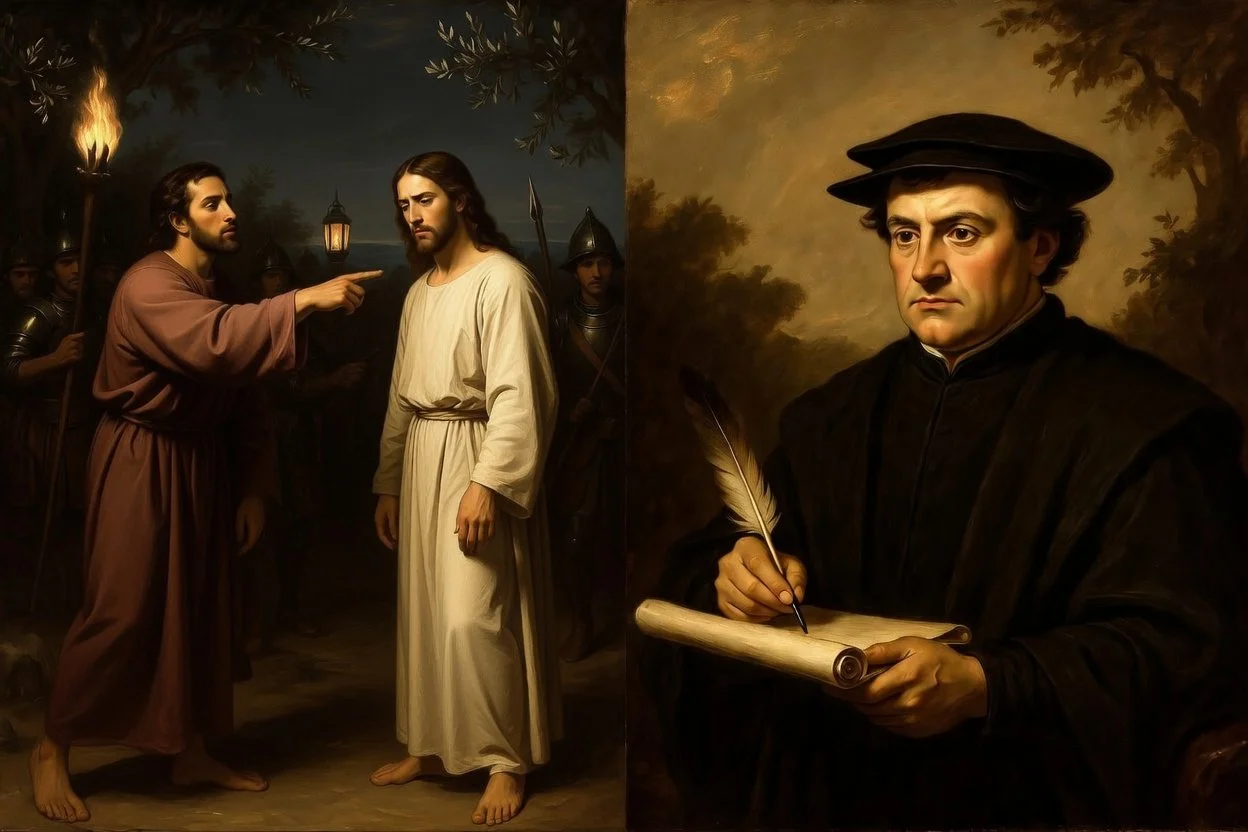
Judas Iscariot: Free Will or Predestined to Betray
Divine Sovereignty and the Bondage of the Human Will: Lessons from the Betrayal of Judas Iscariot in Martin Luther’s Theology
I. Introduction: The Everyday Christian’s Struggle with Free Will and God’s Control
Many sincere Christians today experience a genuine tension in their walk with God. They hear biblical teaching on God’s absolute sovereignty, His complete rule over history, creation, and the details of individual lives, yet they are also regularly encouraged to “choose God,” “decide for Christ,” and take personal responsibility for faith and moral living. This raises practical questions: If God is sovereign over everything, including my decisions, do I truly have freedom? Am I merely a puppet? And if my choices are not ultimately independent, how can God justly hold me accountable for sin or expect heartfelt love for Him?
These concerns surface frequently in church life. Many believers value strong personal autonomy and prefer to see themselves as masters of their own destiny, including the decisive choice for salvation. Teachings that appear to limit human freedom can feel unsettling, often summarized in familiar phrases such as “God doesn’t make robots” and “True love must be freely chosen; otherwise, it isn’t genuine.” These intuitions reflect widespread assumptions in contemporary Christianity (often aligned with Arminian-leaning perspectives) that emphasize human responsibility and the cooperative nature of faith.
This paper contends that the perceived conflict between human agency and divine sovereignty finds resolution in Scripture itself, particularly through the account of Judas Iscariot. Martin Luther addressed this dilemma directly and powerfully in his 1525 treatise The Bondage of the Will, written against Erasmus of Rotterdam.
Drawing on Luther’s arguments and the New Testament portrayal of Judas, this paper demonstrates that the human will, though bound by sin and never independent, remains genuinely willing and accountable. True freedom and moral responsibility emerge not from autonomous self-determination but from humble dependence on God’s sovereign grace. This biblical balance offers comfort and clarity rather than confusion or despair to the everyday believer.
The structure proceeds as follows: Judas Iscariot as the prime biblical illustration; Luther as the Reformation voice who confronted the issue; an exposition of Luther’s core argument with scriptural reinforcement; application to modern Christian struggles; and a conclusion that frames practical discipleship through the lens of Judas’s story.
II. Judas Iscariot as the Biblical Paradigm of the Free-Agency-versus-Sovereignty Tension
The New Testament presents Judas Iscariot in a manner that sharply confronts the tension between human agency and divine sovereignty. Chosen as one of the Twelve apostles (Luke 6:13-16), Judas received the same calling, teaching, and miracles as the others. Yet Jesus knew from the outset that he was “a devil” who would betray Him (John 6:70-71). During the final week, Satan entered Judas (Luke 22:3; John 13:27), and he willingly negotiated the betrayal for thirty pieces of silver, sought an opportunity, and identified Jesus with a kiss (Matthew 26:14-16).
Simultaneously, the betrayal belonged to God’s sovereign redemptive plan. It fulfilled Old Testament prophecy, such as Psalm 41:9, which Jesus applied directly to Judas (John 13:18). The apostles later affirmed that “the Scripture had to be fulfilled” concerning him (Acts 1:16). Jesus pronounced solemn judgment: “Woe to that man by whom the Son of Man is betrayed! It would have been better for that man if he had not been born” (Matthew 26:24; Mark 14:21). In His high priestly prayer, He called Judas “the son of destruction” whose loss fulfilled Scripture (John 17:12). The crucifixion, enabled by the betrayal, took place “by the definite plan and foreknowledge of God” (Acts 2:23), even as human agents acted according to their own intentions.
Judas serves as the ideal case study because his actions appear both voluntary, driven by personal greed (John 12:4-6) and followed by remorse (Matthew 27:3-5), and divinely ordained.
No other figure so clearly embodies the dilemma faced by thoughtful Christians: How can a person be held morally responsible for a choice that was foreknown, prophesied, and necessary to God’s saving purpose?
Judas’s story functions both as a sober warning against presumption and as an invitation to trust that God’s sovereignty encompasses even human failure without negating accountability. It calls believers today to self-examination under the light of God’s knowing and gracious rule.
III. Martin Luther as the Reformation Voice Addressing the Dilemma Through Judas
In 1525, Martin Luther published The Bondage of the Will in response to Desiderius Erasmus’s defense of free choice (De Libero Arbitrio). Erasmus advocated a cooperative human will capable of contributing to salvation, a position Luther regarded as a threat to the doctrine of grace alone and the glory of God. The debate was not abstract; it concerned the heart of the gospel, whether salvation rests ultimately on divine mercy or on human decision.
Luther drew on biblical figures such as Pharaoh and especially Judas Iscariot to illustrate his case. He argued that God’s infallible foreknowledge and omnipotence render certain outcomes necessary, yet the human actor performs the deed willingly and thus remains responsible. Luther wrote pastorally as well as polemically, aiming to comfort anxious consciences by grounding assurance in God’s unchanging will rather than the variability of human choice. His robust defense of sovereignty was intended to humble pride, exalt grace, and strengthen faith for ordinary believers.
While the Erasmus-Luther exchange represents a classic Reformation flashpoint (with echoes in later Arminian-Calvinist discussions), Luther’s position sought to remain faithful to the full biblical witness rather than philosophical speculation.
IV. Luther’s Core Argument: The Will in Bondage and God’s Unshakable Sovereignty
Central to Luther’s argument is the biblical teaching on the Fall: the human will is in bondage to sin and cannot, by its own power, choose God or spiritual good. Passages such as Romans 3:9-18 (“None is righteous, no, not one… no one seeks for God”) and Ephesians 2:1-3 (humanity is “dead in the trespasses and sins” and “by nature children of wrath”) underscore this enslavement to corrupt desires. Only God’s sovereign grace can set the will free.
Luther connected this bondage to divine foreknowledge and omnipotence. Using Judas as a key example, he wrote: “If God foreknew that Judas would be a traitor, Judas became a traitor of necessity, and it was not in the power of Judas or of any creature to act differently, or to change his will, from that which God had foreseen. It is true that Judas acted willingly, and not under compulsion, but his willing was the work of God, brought into being by His omnipotence, like everything else.”
Luther carefully distinguished necessity of consequence (what God foreknows and purposes must occur) from coercion or external force. Judas betrayed Jesus voluntarily, according to his own sinful desires, even as Satan entered him and the act fulfilled prophecy.
This framework upholds both divine sovereignty, God “works all things according to the counsel of His will” (Ephesians 1:11), and genuine human accountability, since people act willingly according to their nature.
Key supporting points include: (1) Scripture portrays God sovereignly directing even evil acts toward His purposes without authoring sin (e.g., the cross); (2) moral responsibility rests on willing action according to character, not on absolute libertarian freedom to choose otherwise in every instance; and (3) the gospel depends on this reality, if salvation hinges partly on autonomous choice, grace ceases to be grace. Faith itself becomes a gift, and assurance rests securely on God’s sovereign mercy.
Overview of Scriptural Reinforcement
Luther’s claims rest firmly on the New Testament’s integrated portrayal of Judas and the cross, which consistently presents human willing and divine ordination as compatible.
The betrayal fulfilled prophecy that “had to be fulfilled” (Acts 1:16; cf. Psalm 41:9 in John 13:18). Jesus foretold it so that the disciples would later believe (John 13:19). He identified Judas as “the son of destruction” (John 17:12) and declared woe upon him (Matthew 26:24), affirming both the necessity within God’s plan and Judas’s personal guilt. The crucifixion occurred “by the definite plan and foreknowledge of God,” yet those involved acted with their own hands and intentions (Acts 2:23; 4:27-28).
Judas himself acted willingly: he negotiated payment, chose the moment, and kissed Jesus to signal betrayal. Scripture reveals his heart through greed (John 12:4-6) without depicting him as a passive instrument. Jesus knew one of the Twelve was “a devil” from the beginning (John 6:70-71). These texts together illustrate compatibilist responsibility, willing human action within God’s sovereign purpose, rather than libertarian independence. The same pattern appears elsewhere (e.g., Pharaoh’s hardening). This biblical harmony magnifies grace: salvation cannot depend on a bound will but rests entirely on the God who works all things for good (Romans 8:28). Judas’s story thus becomes a profound illustration of how divine sovereignty encompasses human betrayal without erasing accountability or diminishing the reality of willing choice.
V. Applying Luther’s Insights to the Modern Christian’s Practical Dilemmas
Luther would address the contemporary emphasis on autonomy by identifying the desire to remain “master of my own destiny”, including the decisive choice for salvation, as a manifestation of the fallen will’s bondage. This instinct echoes the original temptation to “be like God” (Genesis 3:5). True liberty arises when believers relinquish the illusion of ultimate control and rest in the God who sovereignly “works all things according to the counsel of His will” (Ephesians 1:11). This surrender does not diminish personhood; it liberates from the exhausting burden of self-justification.
Regarding the common assertion that genuine responsibility and love require independent free will, Luther would point out that accountability flows from willing action according to one’s nature. Judas bore full responsibility for his betrayal precisely because he performed it voluntarily from a greedy heart, not as a coerced puppet. Likewise, authentic love for God springs from a heart regenerated by sovereign grace: “We love because he first loved us” (1 John 4:19). The concern that sovereignty reduces people to “robots” misunderstands the doctrine; God’s rule restores true humanity, enabling willing obedience and relationship rather than mechanical determinism.
Practically, this theology comforts believers plagued by doubts about the strength or sincerity of their “choice” for God, much like the apostles who witnessed Judas’s fall yet found assurance in Christ’s sovereign knowledge and keeping power (John 17:12). It also challenges self-reliant Christians who treat faith as a personal achievement, warning against burnout and calling them instead to daily dependence on the Holy Spirit. Just as Judas acted willingly within God’s plan, modern believers can pursue responsible obedience while trusting God to sustain their faith and direct their steps. Far from discouraging moral effort, this view grounds diligence in gratitude for grace already given.
VI. Conclusion: Embracing the Answer Framed by Judas Iscariot
The account of Judas Iscariot, interpreted through Martin Luther’s The Bondage of the Will and the full witness of the New Testament, demonstrates that divine sovereignty and human agency are not rivals but harmonize within God’s wise and redemptive purposes. The will remains bound by sin yet acts willingly and bears accountability. God sovereignly ordains all things, including dark betrayals, for the accomplishment of salvation, without nullifying responsibility or the reality of voluntary choice.
For the modern Christian facing the everyday struggle with autonomy and assurance, this truth is deeply practical. It cultivates daily humility and honest self-examination, acknowledging that apart from grace our wills stay enslaved. It transforms sovereignty into profoundly good news: the same God who foreknew and incorporated Judas’s betrayal works all things together for the good of those who love Him (Romans 8:28). It delivers solid assurance of salvation by grace alone through faith alone, freeing believers from the wearisome quest to secure their own destiny. And it renews awe at the cross, where even betrayal became the pathway to redemption.
Therefore, the believer who grasps this biblical balance can walk in reverent freedom, neither despairing over past failures nor presuming on personal strength, but resting confidently in the sovereign, gracious God whose will cannot fail. Meditating on Judas through Luther’s lens invites every Christian to trust Him fully with both present choices and eternal destiny, glorifying the mercy that triumphs even through human weakness.
References
Luther, Martin. The Bondage of the Will. Translated by J.I. Packer and O.R. Johnston. Grand Rapids: Fleming H. Revell, 1957.
The Holy Bible, English Standard Version (ESV). Wheaton: Crossway, 2001.