
The Silent Weight of Tragedy: How Pain Reshapes Our View of God
Reading Habakkuk Through the Lens of Deep Loss and Unanswered Prayer
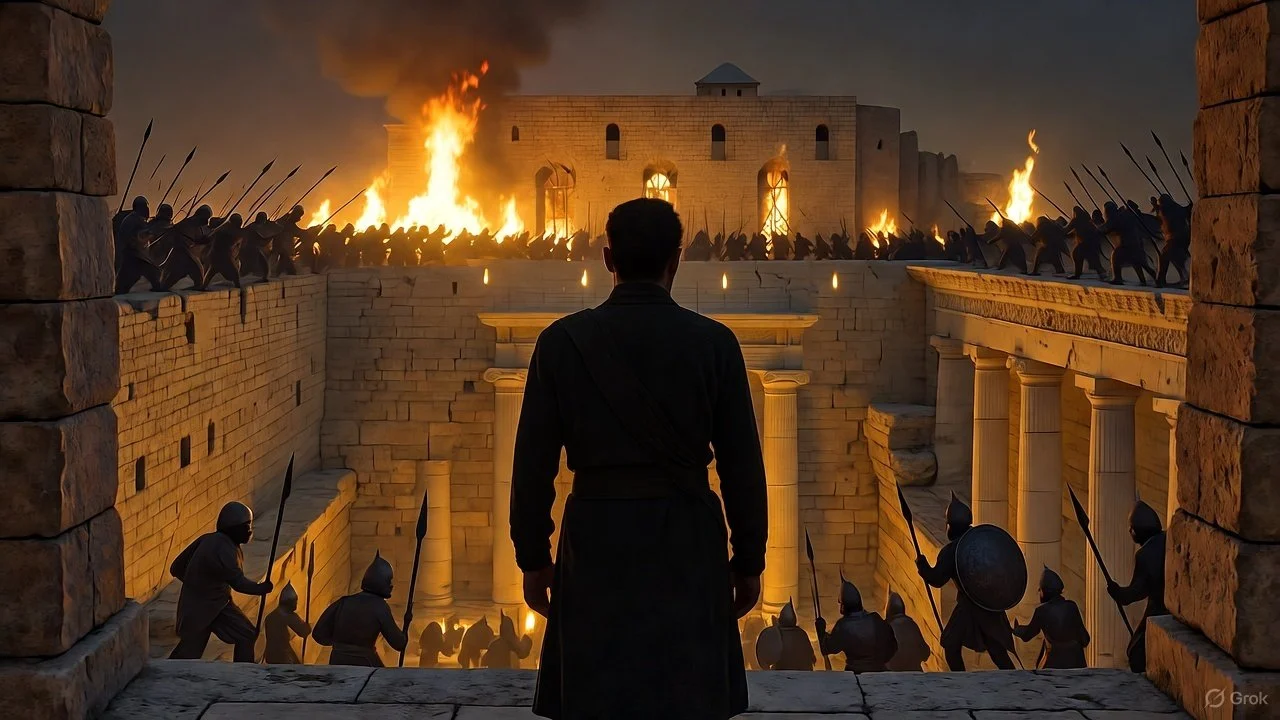
Habakkuk’s Tragedy
There are moments in life that do not simply hurt, they redefine us. Tragedy has a way of reaching into the deepest parts of who we are and rearranging everything we thought we knew. It alters our assumptions, our instincts, our expectations. And perhaps most profoundly, it reshapes the way we think about God.
Before suffering enters our story, theology often feels clean. We speak of God’s goodness with ease. We affirm His sovereignty without hesitation. We read Scripture with a sense of distance, as if its tragedies belong to another world. But when the unthinkable happens, when loss tears through the fabric of our lives, those tidy categories begin to tremble. The questions we once entertained as abstractions suddenly become urgent, personal, unavoidable.
Pain has a way of forcing honesty.
And it is here, in this raw and disorienting place, that the book of Habakkuk becomes more than an ancient text. It becomes a companion.
Many interpretations of Habakkuk remain on the surface, circling around themes of moral failure, divine punishment, or national decline. These readings are not wrong, but they are incomplete. They often arise from minds that have studied tragedy but have not lived it. Their insights can be intellectually stimulating, even helpful, yet they lack the depth that only suffering can carve into the soul.
Because Habakkuk is not merely a story about judgment. It is a story about God; His character, His presence, His silence, His sovereignty, and how a faithful person wrestles with Him when the world collapses.
Habakkuk does not approach God with polite questions. He brings the kind of anguish that erupts when life has been shattered. He demands answers. He protests divine inaction. He names the evil he sees with unflinching clarity. And he refuses to pretend that faith means ignoring the darkness.
This is not academic theology. This is survival.
When you have walked through profound loss, you begin to understand why Habakkuk speaks the way he does. You recognize the tremor in his voice. You feel the weight behind his words. You see that his questions are not theoretical, they are the cries of someone whose world has been torn apart.
And in that recognition, something remarkable happens:
you discover that God invites this kind of honesty.
The God of Habakkuk is not fragile. He does not recoil from our grief or our confusion. He does not silence our questions. Instead, He meets us in the very place where our faith feels most threatened. He listens. He responds. And He reveals Himself in ways that only the wounded can fully appreciate.
Tragedy does not merely challenge our theology, it deepens it. It strips away the illusions we cling to and forces us to grapple with the God who actually is, not the God we imagined Him to be. It teaches us that faith is not the absence of questions but the courage to bring those questions to the One who holds all things together.
Habakkuk’s journey is not simple, and it is not neat. But it is real. It is human. And it speaks directly to anyone who has ever looked at their life and whispered, “God, where are You in this?”
If you’ve walked through that kind of darkness, Habakkuk has something to say to you, something deeper, more honest, and more hopeful than the surface-level readings we often hear. And if you haven’t, his story may prepare you for the day when life demands a faith that can survive the storm.
There is more to this ancient prophet than many realize. Much more. And his wrestling may just help you understand your own.