
Search Articles
Search the archive to uncover reflections, sermons, and studies centered on finding faith and hope amid suffering. Use keywords, scripture references, or topics, like trust, lament, or Habakkuk, to quickly locate teachings that guide spiritual growth through tragedy.
Each result includes a concise summary to help you decide what to read next, whether you want theological insight, pastoral encouragement, or practical steps for living faithfully in hard seasons.
Start your search and find resources designed to strengthen trust and sustain hope.

Recent Publications
Autotheos and Nicene Orthodoxy: Reconsidering the Son’s Aseity in Light of Pro‑Nicene Grammar and the Limits of Privation Theodicy
This article argues that Calvin’s claim that the Son is autotheos, “God of Himself”, directly addresses a long‑standing tension in how some readers interpret the Nicene Creed. On one hand, the Creed proclaims the Son as “God from God”; on the other, it insists that He is “true God from true God,” fully and eternally divine.

Modern Individualism and the Recovery of Identity, Freedom, and Dignity in the Church
The gospel doesn’t erase individuality; it restores it. In Christ persons are known, loved, and given a secure identity that doesn’t depend on performance, reinvention, or social validation. The biblical story dignifies human beings more deeply than modern individualism ever could because it locates their worth in God’s creative and redemptive love.
The Old Testament and the Cross
The Old Testament is often invoked to support a retributive view of divine justice, a vision of God whose primary mode of action is proportional payback. Certain passages, especially those involving sacrifice, judgment, or national calamity, are sometimes interpreted as evidence that penal substitution is simply a refined version of retribution theology.
Habakkuk 2:4: The Righteous, the Vision, and the Promise of Life
This is the lived expression of Hab 2:4b. The prophet who was told that the vision's ʾemûnâ would sustain him now demonstrates what that sustenance looks like in practice. His rejoicing is not despite loss, as if loss were merely a background inconvenience; it is through and within loss, in the very teeth of devastation, grounded entirely in the character of God rather than in the condition of the world.
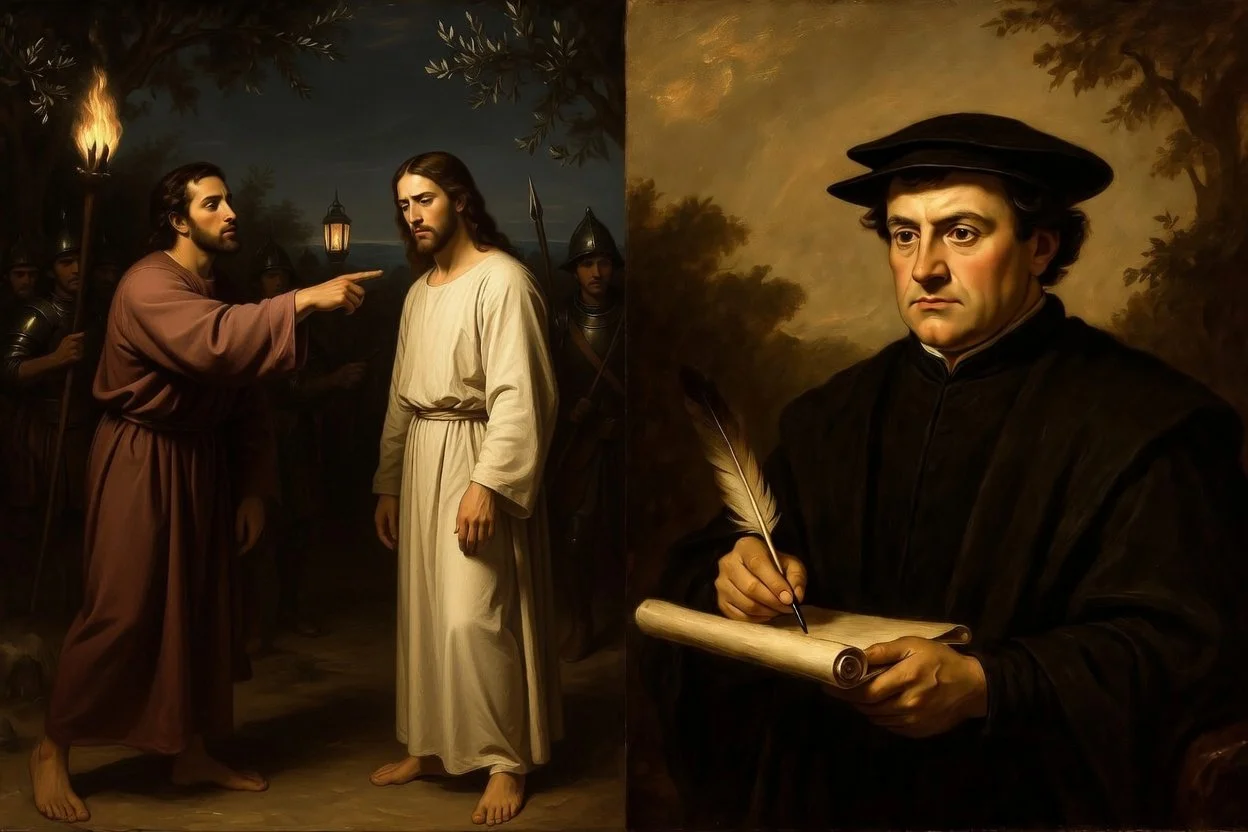
Judas Betrayal: Free Will or God’s Sovereignty
Many sincere Christians today experience a genuine tension in their walk with God. They hear biblical teaching on God’s absolute sovereignty, His complete rule over history, creation, and the details of individual lives, yet they are also regularly encouraged to “choose God,” “decide for Christ,” and take personal responsibility for faith and moral living. This raises practical questions: If God is sovereign over everything, including my decisions, do I truly have freedom? Am I merely a puppet? And if my choices are not ultimately independent, how can God justly hold me accountable for sin or expect heartfelt love for Him?