
When God Feels Silent: How the Holy Spirit Keeps Christ Present When Everything Hurts
When God Feels Silent: How the Spirit Keeps Christ Present in Seasons of Suffering
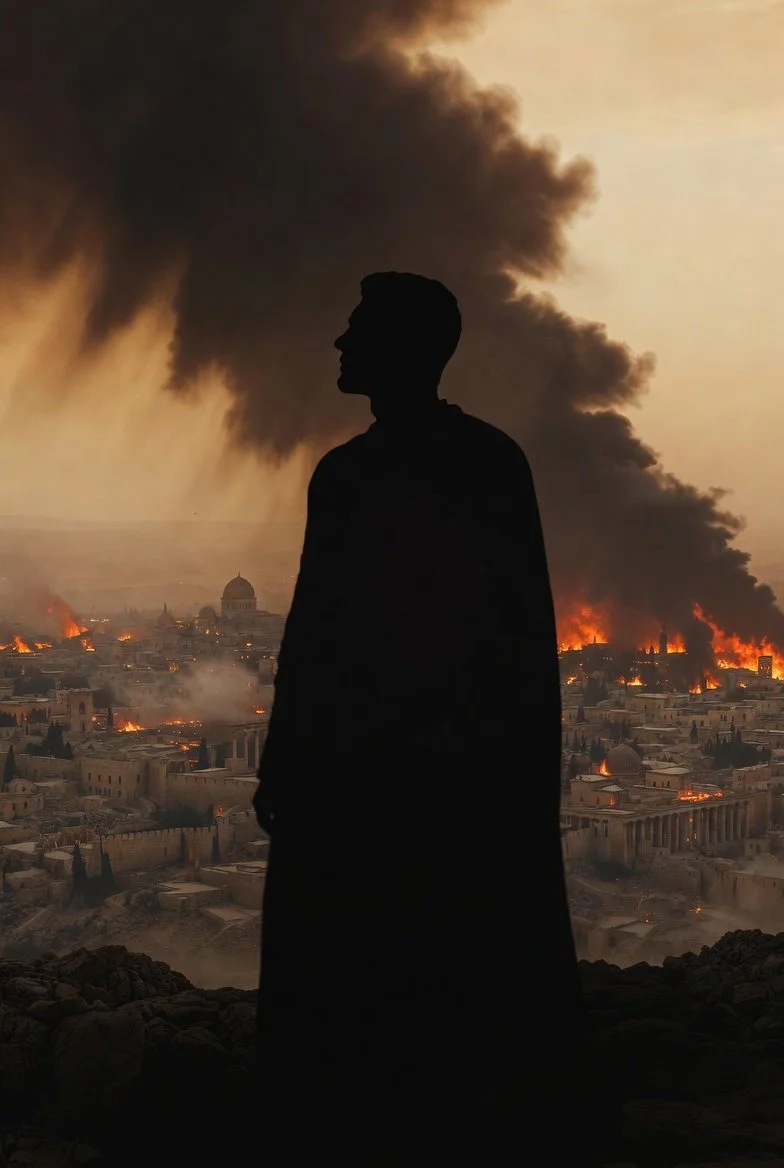
Habakkuk at Jerusalem
Habakkuk’s book begins with a cry that feels painfully familiar: “O Lord, how long shall I cry for help, and You will not hear?” It is the prayer of someone who knows God, trusts God, and yet cannot reconcile what he sees with what he believes. It is the prayer of a believer who feels abandoned by the very One he loves.
Most of us do not need to imagine that tension. We have lived it. We have stood in hospital rooms, beside graves, in broken marriages, in seasons of depression or betrayal or exhaustion, and whispered the same question: Where are You?
Habakkuk’s struggle is not theoretical. It is the collision of faith and experience. And at the center of that collision is a fear as old as the fall—that God may be silent, distant, or indifferent.
But the gospel tells a different story. And the Spirit is the One who makes that story real.
The Spirit Who Refuses to Leave Us Alone
The Holy Spirit does not hover vaguely above the chaos of our lives. He does not wait for us to climb out of our confusion before He draws near. He comes from the risen Christ, sent by the Father, to make Jesus present in the very places where we fear He is absent.
This is not sentimental comfort. It is the fruit of Christ’s own work.
Christ entered our suffering through His death.
He conquered our suffering through His resurrection.
He reigns over our suffering through His ascension.
And He fills us in our suffering through His Spirit.
Pentecost is not an add‑on to the gospel. It is the guarantee that the God who saves us is the God who stays with us. The Spirit’s ministry is not to offer new explanations but to anchor us in the One who has already borne our griefs and carried our sorrows. He keeps Christ before our eyes when everything else tries to obscure Him.
This is why the Spirit’s presence matters so deeply in seasons of pain. Without Him, the Word becomes a distant memory. With Him, the Word becomes a living voice.
Habakkuk’s Watchtower and the Spirit’s Witness
Habakkuk climbs the watchtower not to escape the world but to wait for God in the middle of it. He does not know when God will speak. He only knows that he cannot live without hearing Him.
We stand on our own watchtowers: hospital chairs, sleepless nights, unanswered prayers, and we wait. But unlike Habakkuk, we wait on the other side of the cross, the empty tomb, the ascension, and Pentecost. We wait with the Spirit who has been poured out, not withheld. We wait with the One who makes Christ’s presence more certain than our own breath.
The Spirit does not always give clarity. But He always gives Christ.
And Christ is enough.
A People Sustained, Not by Explanations, but by Presence
When a congregation begins to trust the Spirit in seasons of suffering, something beautiful happens. Not dramatic. Not flashy. But unmistakably holy.
The Word begins to land with a different weight, not because the preacher has changed, but because the Spirit is opening hearts to see Christ. Prayers become honest again, stripped of pretense, shaped by dependence. Worship becomes less about performance and more about clinging to the God who has promised never to leave us.
And slowly, almost imperceptibly, the Spirit forms a people who embody the gospel they confess.
They become patient with one another because Christ has been patient with them.
They become gentle because the Spirit has met them in their weakness.
They become courageous because suffering no longer feels like evidence of God’s absence.
They become generous with kindness, empathy, and gospel‑shaped exhortation because the love of Christ has taken root in their bones.
This is not triumphalism. It is resurrection life in ordinary people.
The Glory of Christ in a Suffering Church
The death of Christ assures us that God has entered our pain.
The resurrection assures us that suffering will not have the last word.
The ascension assures us that Christ reigns over every injustice.
Pentecost assures us that He is with us until the end.
This is the glory of the gospel: Christ has not only secured our salvation, He has given us His Spirit so that His own life might be formed in us, even in the darkest valleys.
A congregation shaped by this reality becomes a quiet miracle. Not loud. Not impressive. But radiant. They love God with a sincerity that suffering cannot extinguish. They treasure the salvation Christ has secured. And they feel a burning desire, steady, humble, joyful, to share that hope with others through mercy, compassion, and the kind of exhortation that lifts weary eyes back to Jesus.
This is the church Habakkuk longed for.
This is the church Christ died to create.
This is the church the Spirit sustains when everything else shakes.
May God make us such a people.
Questions
When God feels silent or slow to act, what do I instinctively trust, my interpretations of the moment, or the Spirit’s witness that Christ is still present, still reigning, still with me?
How has suffering, past or present, shaped the way I listen to the Spirit through the Word? Am I allowing Him to draw me toward Christ, or have I settled into a posture of guarded distance?
Where might the Spirit be inviting me to embody hope in the midst of hardship, through gentleness, empathy, or quiet acts of mercy, so that others glimpse the nearness of Christ even when explanations are absent?