
Habakkuk’s Tragedy
God’s Role When the Unimaginable Happens
by Allan R. Snodgrass
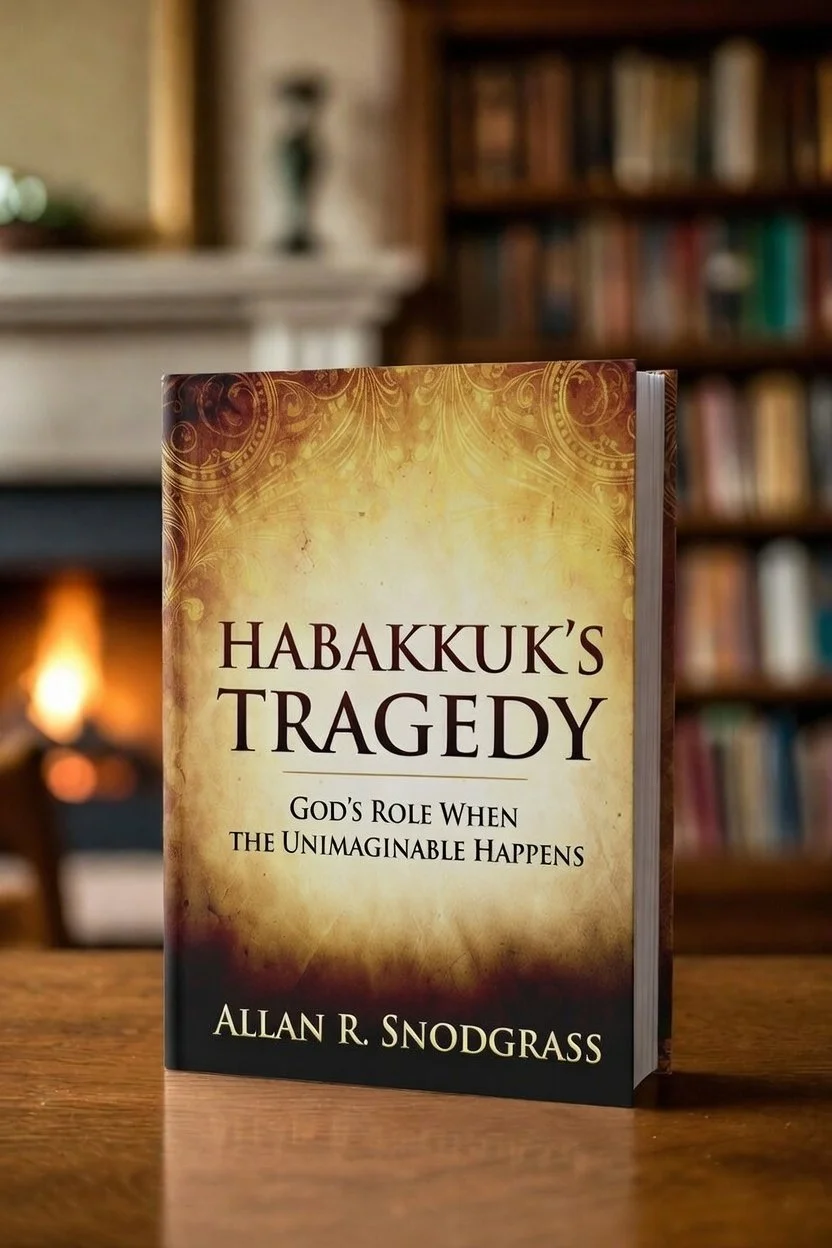
Book Overview
Habakkuk’s Tragedy is a thoughtful exploration of the Old Testament book of Habakkuk, framed through the lens of profound personal and communal suffering. Set against the historical backdrop of the Chaldean (Babylonian) siege and destruction of Jerusalem in the late 7th to early 6th century BCE, the book follows the prophet Habakkuk’s raw, honest dialogue with God amid overwhelming tragedy, internal corruption, injustice, famine, violence, and impending national collapse. This work invites readers to bring their own deepest questions about pain, evil, and God’s involvement directly to Him, just as Habakkuk did. It does not offer quick fixes or shallow comforts but provides a pathway for honest lament, deeper trust, and hope rooted in God’s sovereign redemption.
Key Themes and Structure
Tragedy’s Impact: The book begins by acknowledging how tragedy reshapes our worldview, prompting urgent questions: Where is God when the unimaginable happens? Why does evil seem to triumph?
Interpretive Lenses: Readers encounter four perspectives on Habakkuk’s message.
Rules of Engagement: Foundational presuppositions guide the exploration.
Verse-by-Verse Journey: Chapters unpack Habakkuk’s lament (1:2–4), God’s surprising response (raising the Chaldeans, 1:5–11), the prophet’s ongoing wrestling, divine woes against the wicked (Habakkuk 2), and the climactic prayer of defiant faith (Habakkuk 3).
Real-Life Resonance: Modern case studies, such as the loss of a child, irreversible trauma, and enduring grief, mirror Habakkuk’s experience, showing how believers can lament without pretense while clinging to hope.
Gospel-Centered Resolution: Tragedy is not random punishment but part of a fallen world God enters and redeems through Christ’s cross and resurrection.
Each section includes literal Scripture, paraphrased renderings, theological insights, historical/archaeological context, and prayers to support personal reflection or group discussion. The book ends with encouragement to trust God’s presence and promise to “make all things new” (Revelation 21:5), even when pain persists.
Who This Book Is For
This book speaks especially to:
Christians walking through deep personal tragedy: bereavement, chronic illness, injustice, or existential doubt
Those disillusioned by easy answers or prosperity-focused teachings
Pastors, counselors, Bible study leaders, and small-group facilitators seeking resources on lament, theodicy, and Old Testament prophets
Readers who appreciate honest, empathetic theology that honors both raw pain and enduring hope
If you have ever cried out, “How long, O Lord?” or struggled to reconcile a good God with a broken world, Habakkuk’s Tragedy offers companionship, not clichés.
Habakkuk’s Tragedy is highly recommended for anyone seeking a serious yet compassionate guide through suffering. In a crowded field of books on grief and faith, Snodgrass’s work stands out for its exegetical integrity, emotional honesty, and gospel-centered hope. It equips readers to lament faithfully, question deeply, and trust stubbornly, knowing that the God who entered our broken world in Christ is present in every tear and promises to make all things new (Rev. 21:5).
Pastors will find it a rich resource for preaching and counseling; lay readers will discover a companion that honors both their pain and their faith.
This is a book that does not erase sorrow but walks with the reader through it toward enduring hope.
Why This Book Matters
In an age of widespread suffering, from personal losses to global crises, the book of Habakkuk remains strikingly relevant. It models bold, relational prayer that moves from confusion and accusation to worship and trust. Allan R. Snodgrass writes with pastoral warmth, scholarly care, and unflinching honesty, blending vivid historical detail, biblical exegesis, and contemporary stories to create a voice that feels like a wise friend walking alongside you in the dark.
The result is a resource that equips believers to lament faithfully, question deeply, and hope stubbornly anchored in the God who governs chaos, enters suffering, and promises ultimate restoration through Jesus Christ.
For inquiries about the book, speaking engagements, study guides, or bulk orders, please contact the author here.
The book excels in several areas: its refusal to offer cheap resolutions, its integration of historical and archaeological context to make Habakkuk’s crisis feel immediate, and its innovative “Leviathan” framework that reframes tragedy as cosmic brokenness rather than targeted punishment. Snodgrass handles difficult texts with nuance, affirming God’s sovereignty over calamity while carefully distinguishing divine intent from moral authorship of evil.
[Note: Full manuscript available upon request for review, endorsements, or translation rights.]
Habakkuk’s Tragedy: God’s Role When the Unimaginable Happens
The book unfolds in a logical, progressive manner that mirrors Habakkuk’s own journey from anguished questioning to defiant trust. It begins with an extended introduction that defines tragedy as a worldview-shattering event and presents four interpretive perspectives on the prophet’s message: the Enlightened Rationalist (tragedy as divine judgment), the Social Justice Advocate (a call to resist oppression), the Eschatologist (a foreshadowing of ultimate victory), and Snodgrass’s preferred “Leviathan” view (suffering as the inevitable consequence of a comprehensively broken creation following Genesis 3). This section also establishes the author’s foundational “rules of engagement”, God’s absolute sovereignty, the limits of human understanding, the objective reality of evil, and redemption through Christ.
Subsequent chapters move through the text of Habakkuk in broad narrative strokes. Early chapters reconstruct the historical crisis of the Chaldean siege of Jerusalem, portraying Habakkuk’s raw lament (Hab. 1:2–4) as a visceral cry against internal corruption and impending destruction. The book then examines God’s surprising response (Hab. 1:5–11), in which the Lord claims responsibility for raising the Chaldeans. Later sections incorporate contemporary case studies of loss and irreversible trauma, showing how modern believers echo the prophet’s questions. The exposition continues toward Habakkuk’s climactic prayer of faith (chapter 3), culminating in a gospel-centered vision of redemption through Christ’s cross and resurrection.
The heart of the book lies in its insistence that tragedy is neither random nor punitive in a simplistic sense, but rather the fallout of a fallen world, a “Leviathan” reality that God sovereignly governs without originating evil. Snodgrass seeks to accomplish two primary goals: first, to validate honest, even accusatory lament as a legitimate and relational form of prayer; second, to anchor suffering believers in the assurance that God is neither absent from pain nor defeated by it, but is actively redeeming it through Christ. The flow, from raw lament to divine disclosure to renewed trust, models a pathway many readers will recognize in their own grief journeys.
“When we experience tragedy, our confusion and anxiety over the circumstances does not mean God is absent and unaware. In this biblical text, we will see God’s perspective on the events, and He will reveal information about Himself to Habakkuk and us.”
Habakkuk’s Tragedy

“The dialogue that unfolds is unquestionably a two-way conversation and is going to be tense, however the one who starts it is God. It shows us God is relational and wants to say something about Himself and how He understands tragic events.”
Habakkuk’s Tragedy
Habakkuk’s Tragedy
A thoughtful and deep study of the book of Habakkuk in the Old Testament that explores the experience of tragic life events and what God reveals in Scripture about who He is and His perspective on suffering.
A helpful read for individuals and groups working through tragic circumstances and God’s sovereignty. Insightful, helpful and healing.
Contact us for more information about Habakkuk’s Tragedy.
Synopsis: Habakkuk’s Tragedy
In an age when personal and collective suffering seems ever-present, Allan R. Snodgrass’s Habakkuk’s Tragedy: God’s Role When the Unimaginable Happens offers a deeply considered Christian response to one of life’s most pressing questions: Where is God when tragedy strikes? At approximately 60,000 words, this work uses the Old Testament book of Habakkuk as a lens through which to explore honest lament, divine sovereignty, and redemptive hope amid profound pain. Snodgrass, a pastor and theologian with extensive ministry experience, writes with both scholarly care and pastoral tenderness, making this volume a valuable companion for believers walking through grief.
Habakkuk’s Tragedy is written primarily for adult Christians (ages 25–65) who are navigating deep personal sorrow, bereavement, chronic illness, injustice, or seasons of doubt, as well as pastors, counselors, and small-group leaders seeking biblically grounded resources on lament and theodicy. It speaks especially to those weary of prosperity-oriented answers or superficial comfort, offering instead a space for honest wrestling without abandoning hope.
Get in touch.
Interested in more information about Habakkuk’s Tragedy? Get in touch with us using the form below. We look forward to meeting you.