
Habakkuk 2:4 When God Seems Late but Is Never Unfaithful
Habakkuk and the slow, steady hope that grows in the waiting
Habakkuk 2:4 - Part 8 of 8
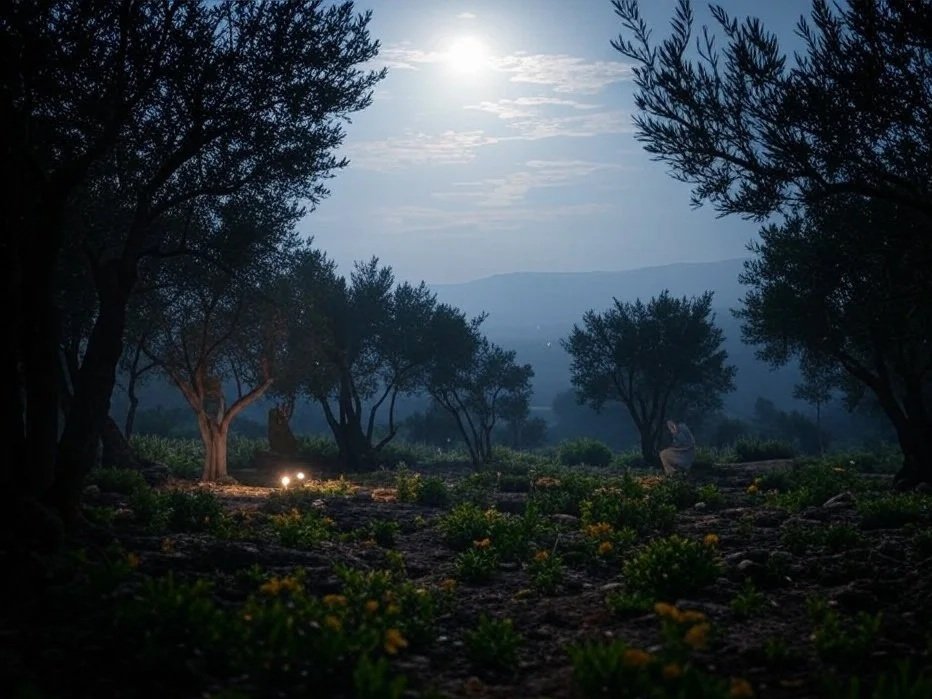
Habakkuk 2:4 - Part 8 of 8
There is a particular kind of suffering that does not break a person all at once. It breaks them slowly. It is the suffering of delay, the long stretch of time between God’s promise and God’s fulfillment, between what He has said and what we see, between the hope we cling to and the reality we wake up to each morning. Delay is its own kind of ache. It is its own kind of trial. It is its own kind of darkness.
Habakkuk lived in that darkness. He stood on the watchtower with a heart full of questions and a world full of contradictions. He had heard God’s promise, but he had not yet seen God’s action. He had received the vision, but the vision had not yet come to pass. And into that tension, God spoke a word that has carried believers for centuries: “If he delays, wait for him.”
The attached analysis notes that these words may refer not only to the vision but to Yahweh Himself: “He will not deceive. If he should (seem to) delay, wait for him.” If this is right, and it fits the flow of the passage, then the delay is not the delay of a message but the delay of a Person. God is coming. But not yet.
This is the heart of every believer who has ever waited for God to act.
The Pain of Waiting for God
Waiting is one of the most difficult spiritual disciplines because it exposes the gap between our expectations and God’s timing. We want immediacy. We want clarity. We want resolution. But God often works on a scale that feels unbearably slow to us. He is not hurried. He is not pressured. He is not reactive. He moves with a deliberate patience that can feel like absence.
Habakkuk felt that absence. He watched the wicked prosper. He watched the righteous suffer. He watched injustice multiply. And he waited. He waited with trembling. He waited with questions. He waited with a heart that did not understand why God seemed so slow to act.
This is the pain of delay. It is not simply the pain of suffering. It is the pain of suffering without seeing God intervene.
The Vision That Holds Us Through the Delay
God does not remove the delay. He gives Habakkuk something to carry through it. He gives him a vision, a revelation that is “concrete, writeable, proclamable,” something solid enough to hold onto when everything else is slipping away. The vision becomes the anchor that keeps the prophet from drifting into despair.
The vision “will not deceive.” The vision “will certainly come.” The vision is grounded in God’s own reliability.
This is why the righteous live by its trustworthiness. They are not sustained by what they see. They are sustained by what God has said. They are not held up by the speed of God’s action. They are held up by the certainty of God’s character.
The vision does not shorten the delay. It strengthens the believer within it.
The Difference Between Delay and Denial
One of the cruelest lies that suffering whispers is that delay means denial. If God has not acted yet, perhaps He never will. If the promise has not been fulfilled, perhaps it was never true. If the vision has not arrived, perhaps it was only wishful thinking.
But Scripture refuses to equate delay with denial. God’s timing is not our timing. His pace is not our pace. His patience is not our impatience. The delay is real, but it is not final. It is not a sign that God has forgotten. It is not a sign that God has changed His mind. It is not a sign that God is indifferent.
Delay is the space in which God’s promise ripens.
Habakkuk is told to wait not because nothing is happening, but because something is happening that he cannot yet see. The vision is moving toward its appointed time. The future is already on its way. God is not late. He is deliberate.
The God Who Comes Slowly and Surely
The attached document emphasizes that the righteous person’s endurance is grounded not in their own strength but in God’s reliability. This is especially true in seasons of delay. The believer does not survive because they are patient. They survive because God is faithful. They do not endure because they have mastered the art of waiting. They endure because the One they are waiting for is incapable of deception.
God may seem slow, but He is never unfaithful. He may seem silent, but He is never absent. He may seem delayed, but He is never late.
This is the paradox of divine timing. God moves slowly enough to stretch our faith, but surely enough to justify it. He delays long enough to deepen our trust, but not long enough to destroy it. He comes at the moment when His arrival will reveal His faithfulness most clearly.
For the One Who Is Still Waiting
If you are living in a season where God seems late, Habakkuk has a word for you. The delay is real, but it is not the end of the story. The waiting is long, but it is not empty. The silence is deep, but it is not abandonment.
You are not waiting for nothing. You are waiting for Someone.
And the God you are waiting for is faithful. He will not deceive you. He will not forget you. He will not fail you.
He will come. He will act. He will keep His promise.
And when He does, you will discover that the delay, painful as it was, did not diminish His faithfulness. It revealed it.
This reflection is part of an eight‑part journey through Habakkuk’s world, tracing the prophet’s movement from anguish to trust and exploring how God forms a faithful people in the midst of suffering. The path is not linear; grief rarely is. We circle back, we falter, we steady ourselves again, and God meets us in every stage with patience and mercy. If you find yourself somewhere along this winding road and need prayer or someone to walk with you, please reach out. You are not meant to carry these questions alone, and I would be honored to pray for you or hear your story.
Allan Snodgrass serves the wider church with a rare blend of theological depth, pastoral steadiness, and the kind of hard‑won wisdom that only comes from years of walking with people through real suffering. His ministry has always lived at the intersection of Scripture and lived experience, where the text is not merely explained but carried into the wounds and questions of ordinary believers. As a writer, teacher, and counselor, he brings the Bible to bear with clarity and honesty, never rushing past the ache but always guiding people toward hope.
His ongoing work in the theology program at Westminster Theological Seminary deepens that ministry with rigorous study, shaping a voice that is both academically grounded and pastorally warm. Whether he is preaching on a Sunday morning, leading a retreat, speaking at a conference, or joining a podcast conversation, Allan’s aim is the same: to help the church wrestle honestly with God, see the gospel with fresh eyes, and find steady grace in the midst of life’s hardest moments.
If this work has encouraged you and you’d like to support Allan’s ministry, you can become a paid subscriber or make a one‑time donation by clicking the link. Your support helps sustain the writing, teaching, and pastoral care that so many have come to rely on.