
Search Articles
Search the archive to uncover reflections, sermons, and studies centered on finding faith and hope amid suffering. Use keywords, scripture references, or topics, like trust, lament, or Habakkuk, to quickly locate teachings that guide spiritual growth through tragedy.
Each result includes a concise summary to help you decide what to read next, whether you want theological insight, pastoral encouragement, or practical steps for living faithfully in hard seasons.
Start your search and find resources designed to strengthen trust and sustain hope.

Recent Publications
Habakkuk 2:4 ʿuppělâ: Presumptuous Swelling and the Anatomy of Defiance
This reading clarifies that Habakkuk is not a book about divine retribution against God’s people. It is a book about divine reliability in the face of human presumption and divine preservation in the face of devouring evil.
Habakkuk 2:4 napšô as “Throat,” Not “Soul”: Distortion, Devouring, and the Moral Imagination
This reading clarifies that Habakkuk is not a book about divine retribution against God’s people. It is a book about divine reliability in the face of human distortion and divine preservation in the face of devouring evil. The swollen throat of the wicked and the steady reliability of God form the central contrast of the book.

Habakkuk 2:4: ʾEmûnâ: Divine Reliability as the Ground of Life
Habakkuk’s world is one in which the righteous suffer, the wicked prosper, and God seems silent. Into that world, God speaks a word that does not explain the mystery of evil but asserts the certainty of His own reliability. The righteous live because God is faithful. This is the meaning of ʾemûnâ. It is the theological center of Habakkuk 2:4 and the interpretive key to the book as a whole.

Habakkuk 2:4 When God Seems Late but Is Never Unfaithful
There is a particular kind of suffering that does not break a person all at once. It breaks them slowly. It is the suffering of delay, the long stretch of time between God’s promise and God’s fulfillment, between what He has said and what we see, between the hope we cling to and the reality we wake up to each morning.

Habakkuk 2:4 When the Prophet Becomes the Paradigm: Habakkuk’s Journey from Complaint to Joy
There is a quiet dignity in the way Habakkuk’s book unfolds. It begins with a man undone by what he sees; violence, injustice, the devouring of the righteous, the apparent silence of God. It ends with a man who can rejoice even when everything collapses around him.

Habakkuk 2:4 When Sight and Promise Collide: Trusting God’s Word When Evidence Contradicts It
There are moments in the life of faith when the world in front of you seems to contradict everything God has ever said. You know the promises. You can recite the verses. You can remember the sermons, the prayers, the moments when God felt near. But then something happens, or fails to happen, and suddenly the evidence of your eyes feels more authoritative than the words of Scripture.

Habakkuk 2:4 When God Promises Survival, Not Vindication
There are seasons when the most honest prayer a person can pray is painfully simple: Lord, help me make it through this. Not triumph. Not victory. Not vindication. Just survival. Just breath. Just enough strength to stand up again tomorrow.

Habakkuk 2:4 When Suffering Twists the Story: The Temptation to Distort God’s Word Under Pressure
There are moments in suffering when the deepest battle is not external but internal. It is not the crisis itself that threatens to undo us, but the way the crisis begins to rewrite the story we tell ourselves about God. Pain has a way of bending perception.

Habakkuk 2:4 When God Seems Late: The Vision That Sustains Us Through the Long Delay
It is the suffering of waiting. The suffering of delay. The suffering of waking up day after day in the same unresolved story, with the same unanswered prayers, the same unhealed wounds, the same unrelieved ache. It is the suffering of living in the gap between what God has said and what we see.
The Old Testament and the Cross
The Old Testament is often invoked to support a retributive view of divine justice, a vision of God whose primary mode of action is proportional payback. Certain passages, especially those involving sacrifice, judgment, or national calamity, are sometimes interpreted as evidence that penal substitution is simply a refined version of retribution theology.

Habakkuk 2:4 When Strength Fails: Endurance Grounded in God’s Faithfulness, Not Our Own
There is a particular kind of suffering that exposes the limits of human endurance. It is not the kind that can be pushed through with determination or managed with spiritual discipline. It is the kind that empties a person.

Habakkuk 1:12-17: Why This Prayer Is About Theodicy — Not God Using Babylon to Judge Judah
Habakkuk 1:12-17 is theodicy in its purest biblical form: the anguished question of the faithful who refuse to lower their view of God to accommodate evil. Later Jewish and Christian traditions (Job, the Psalms of lament, even the cross itself) stand in this same stream.
Habakkuk does not yet have the answer, but his prayer sets the stage for God’s response in chapter 2, and for every believer who has ever asked, in the midst of suffering, “O Holy One, how long?”

Habakkuk 2:4 When God Doesn’t Explain: The Promise of Life in the Midst of Suffering
Habakkuk 2:4, Part 1. When suffering enters a life, quietly or catastrophically, the heart instinctively reaches for explanation. We want the world to make sense again. We want the pain to be justified, or at least contextualized.

Habakkuk 2:4: The Righteous, the Vision, and the Promise of Life
This is the lived expression of Hab 2:4b. The prophet who was told that the vision's ʾemûnâ would sustain him now demonstrates what that sustenance looks like in practice. His rejoicing is not despite loss, as if loss were merely a background inconvenience; it is through and within loss, in the very teeth of devastation, grounded entirely in the character of God rather than in the condition of the world.

When the World Breaks Open: Job, Habakkuk, and the Search for God in a Disordered Creation
Job and Habakkuk stand as companions for anyone who has ever looked at their life or their world and whispered, “This is not how it is supposed to be.” They do not silence that cry. They sanctify it. And in doing so, they lead us toward a deeper, more resilient faith, one that can endure the silence of God, the strangeness of God, and the mystery of a God who remains faithful even when everything else falls apart.

The Transforming Presence of Christ Through the Spirit: Why 2 Corinthians 3:17–18 Matters for Your Life
Discover how 2 Corinthians 3:17–18 reveals the everyday power of the Holy Spirit as the personal presence of the risen Christ. This article shows why real transformation, real freedom, and real endurance in suffering come not from trying harder but from Christ Himself living and working in us through His Spirit. If you’ve ever wondered how Jesus is actually with you in your daily walk, this passage offers the hope your heart has been looking for.
The Silent Weight of Tragedy: How Pain Reshapes Our View of God
If you’ve ever wondered how faith survives the unthinkable, or what it means to trust God when the world collapses, Habakkuk has something to say; something raw, honest, and profoundly human.
When God Feels Silent: How the Holy Spirit Keeps Christ Present When Everything Hurts
When God feels silent, the Spirit keeps Christ near. This article explores how Habakkuk’s raw questions meet the hope of the gospel, showing how the Spirit anchors us in Christ’s death, resurrection, ascension, and Pentecost, and forms a people who endure suffering with love, courage, and quiet, radiant hope.
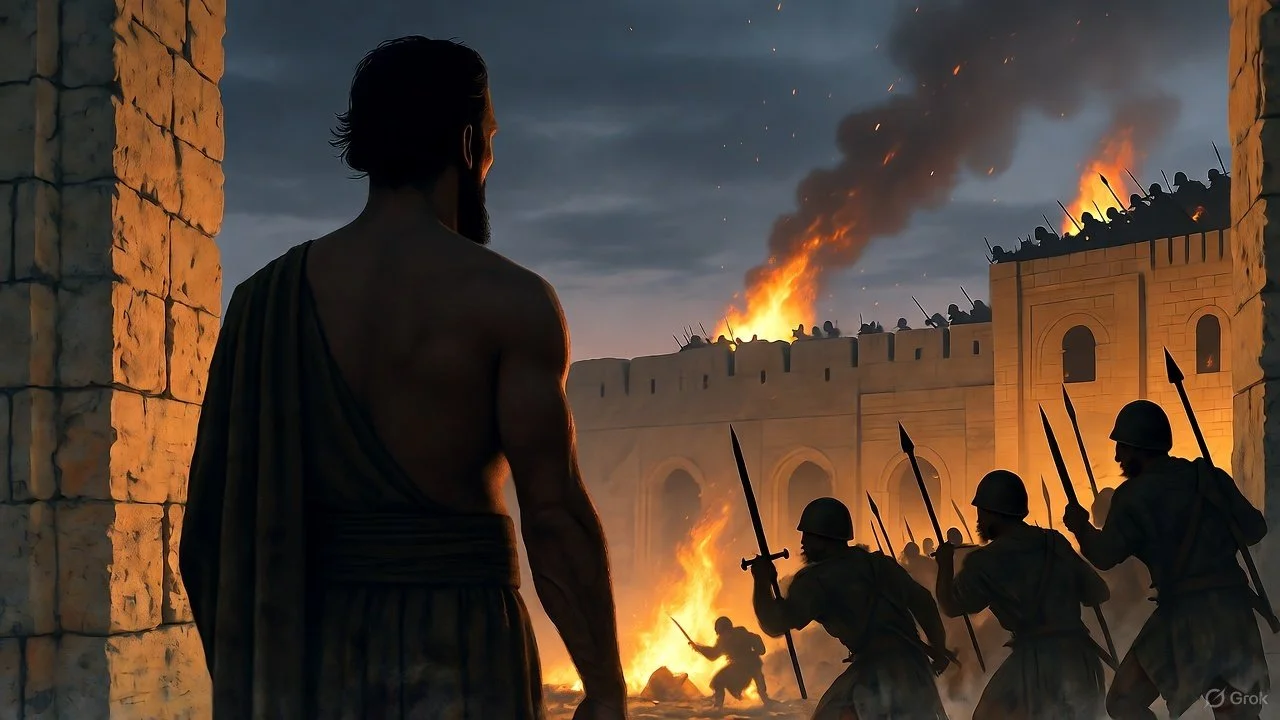
Habakkuk’s Tragedy: God’s Role When the Unimaginable Happens
Habakkuk’s Tragedy is highly recommended for anyone seeking a serious yet compassionate guide through suffering. In a crowded field of books on grief and faith, Snodgrass’s work stands out for its exegetical integrity, emotional honesty, and gospel-centered hope. It equips readers to lament faithfully, question deeply, and trust stubbornly, knowing that the God who entered our broken world in Christ is present in every tear and promises to make all things new (Rev. 21:5). Pastors will find it a rich resource for preaching and counseling; lay readers will discover a companion that honors both their pain and their faith. This is a book that does not erase sorrow but walks with the reader through it toward enduring hope.

2 Timothy 4:1-8 Explained: How Suffering Refines Authentic Faith in Christ
This passage isn't mere advice; it's Paul's hard-won wisdom from suffering, echoing the Bible's lament tradition, showing how tragedy refines faith into something authentic and enduring. If your pain has left you questioning, keep reading to uncover principles from Paul's charge that reveal suffering's redemptive role, and the hope that anchors it.