
Search Articles
Search the archive to uncover reflections, sermons, and studies centered on finding faith and hope amid suffering. Use keywords, scripture references, or topics, like trust, lament, or Habakkuk, to quickly locate teachings that guide spiritual growth through tragedy.
Each result includes a concise summary to help you decide what to read next, whether you want theological insight, pastoral encouragement, or practical steps for living faithfully in hard seasons.
Start your search and find resources designed to strengthen trust and sustain hope.

Recent Publications
What Does the Book of Job Teach about Evil?
Evil is real and agonizing and permitted within the cosmic conflict yet it is never outside God’s sovereign purposes. The book of Job moves the reader from the mystery of suffering through protest and lament to repentance and the quiet trust that says even in the dark I know that my Redeemer lives.

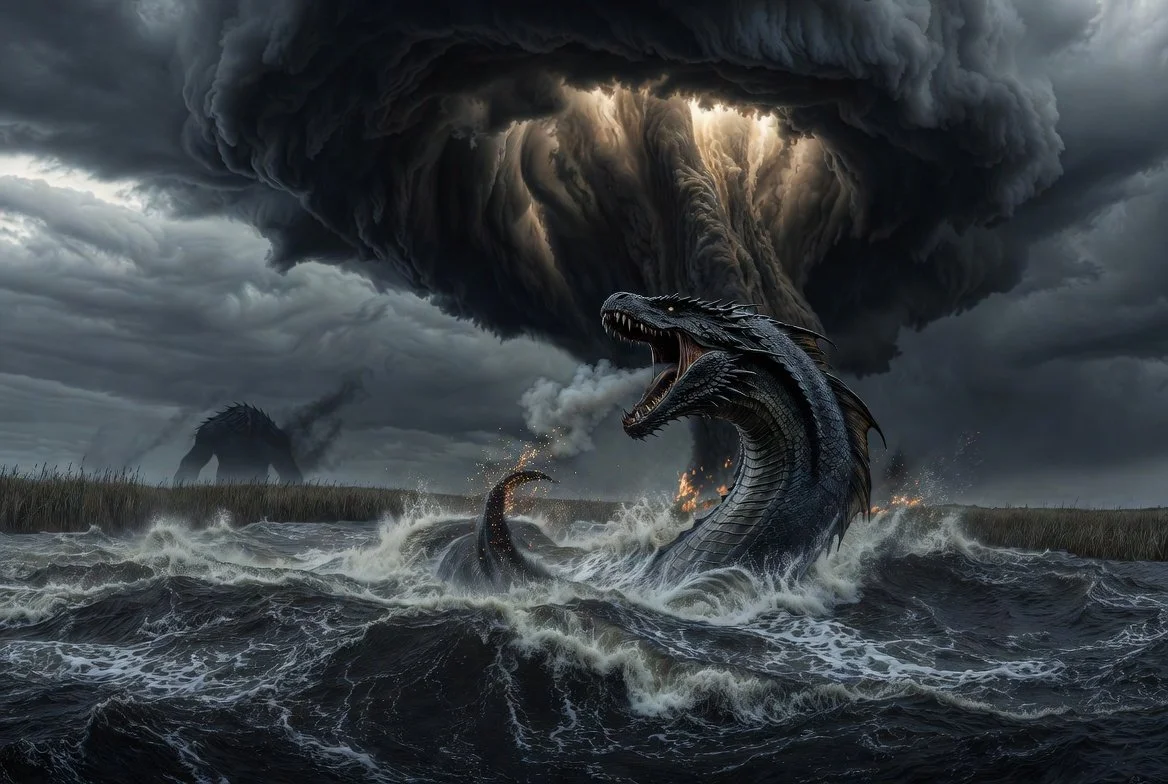
What Is the Leviathan in the Book of Job?
The Leviathan of Job then is no mere monster of the deep. It is Satan himself given dramatic form so that the sufferer may look upon the adversary and discover that even this enemy is the Lord’s. The one who alone can draw out Leviathan is the one who will not abandon his servant to its power. That is the word the whirlwind still speaks to every generation that finds itself contending with the ancient foe.

What Is the Behemoth in the Book of Job?
The Behemoth of Job then is no mere animal of the Jordan marshes. It is Death itself given dramatic form so that the sufferer may look upon the last enemy and discover that even this enemy is the Lord's. The one who made Behemoth with us is the one who will not abandon us to its power. That is the word the whirlwind still speaks to every generation that finds itself walking through the valley of the shadow.

When Theological Confidence Becomes a Counterfeit Virtue
Theologically elite pastors and friends often believe they are defending God. In reality, they are defending a system that cannot bear the weight of real suffering. Job’s friends believed they were speaking for God. But God rejects their theology and vindicates the one who dared to lament. A Christ‑centered theology does not fear lament. It does not silence the wounded. It does not cling to systems that collapse under the pressure of human pain. It looks to the cross, where God himself enters the suffering of the innocent and reveals a love that is deeper than explanation and stronger than death.

When Innocent Suffering Shatters Our Explanations: What Job Teaches Us About Real‑World Tragedy
In a world where tragedy is real and innocence does not guarantee safety, Job’s story becomes a companion for those who grieve and a corrective for those who would rush to interpret their grief.

When the World Breaks Open: Job, Habakkuk, and the Search for God in a Disordered Creation
Job and Habakkuk stand as companions for anyone who has ever looked at their life or their world and whispered, “This is not how it is supposed to be.” They do not silence that cry. They sanctify it. And in doing so, they lead us toward a deeper, more resilient faith, one that can endure the silence of God, the strangeness of God, and the mystery of a God who remains faithful even when everything else falls apart.

Job 38 and Pastoral Counseling
When Privation Meets Pain: Rethinking Evil Through the Voice from the Whirlwind
When Job finally hears from God, it is not the answer he expected. After chapters of lament, accusation, and theological debate, God speaks—not with a tidy explanation, but with a whirlwind. In Job 38, the Lord answers Job out of the storm, asking, “Where were you when I laid the foundation of the earth?” This divine response is not evasive; it is expansive.

Is God In Control When Tragedy Happens?
Is God in control? In a sense yes, but it is not a control like is commonly assumed. It is not as though God has a game box controller that pilots us like a video game. God is in control, but perhaps a better way to say it is that God is in command. When tragedy comes and we scream and ask the question, does God see? Isn’t He in control? The common answer is, Yes - but this is a wholly inadequate and incomplete answer when facing tragedy.

Leviathan
Captain Ahab is a man obsessed with the thing, the White Whale, that changed his life. The White Whale is his nemesis, an uncontrollable element of life that has left him lame and threatened his reality. Now Ahab is intent on destroying the thing that has broken him. Ahab's life was that of a whaler, sea captain and successful merchant. Now he is uprooted, physically changed, and the dominance he felt over his life’s direction is torn and changed by the will and force of an outside entity with a mind of its own. The White Whale intends to destroy Ahab and has the power to do so. (Job 41:10)