
Habakkuk 1:12-17: Why This Prayer Is About Theodicy — Not God Using Babylon to Judge Judah
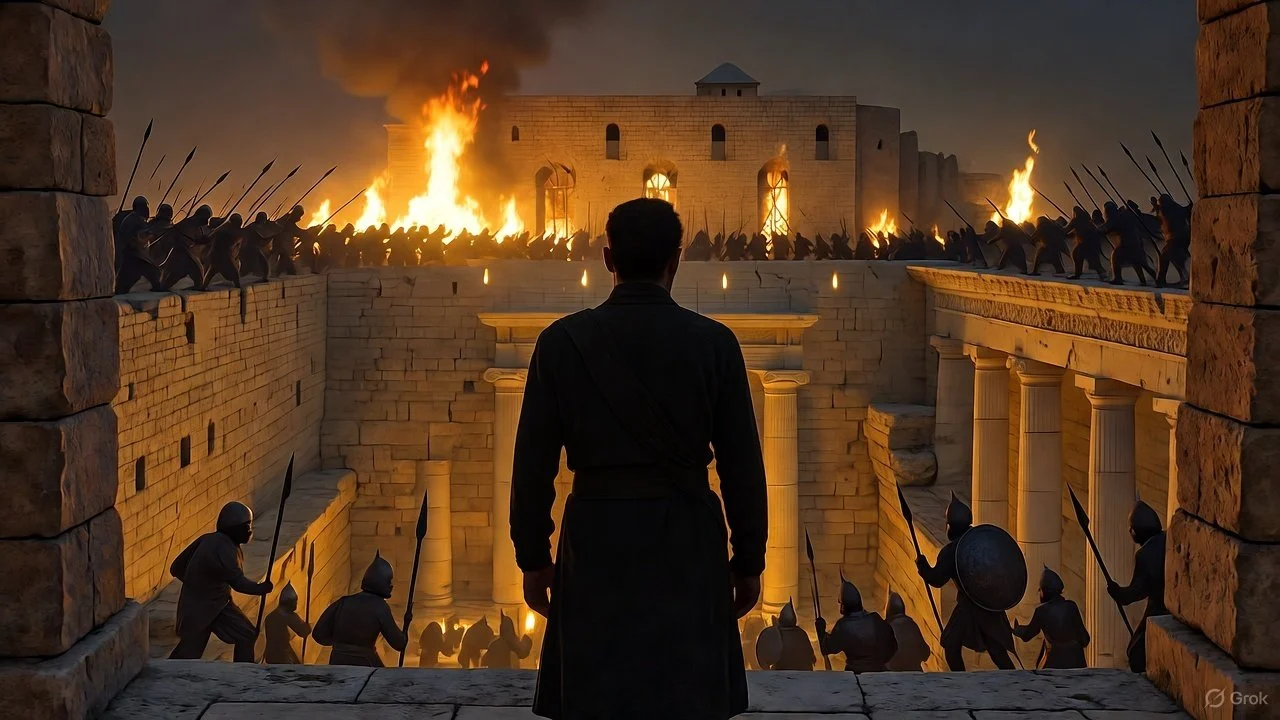
Habakkuk 1:12-17 | Habakkuk’s Tragedy
Francis I. Andersen’s scholarly exegetical analysis shows Habakkuk’s bold lament is a profound cry of theodicy, the question of divine justice in the face of evil, rather than quiet devotional acceptance of retributive judgment on Judah.
In the opening verses of Habakkuk’s second prayer (1:12–17), the prophet confronts God with a question that still echoes through Jewish and Christian traditions: How can a perfectly holy and eternal God permit unchecked evil? Francis I. Andersen, in his meticulous Anchor Bible commentary, offers a philological and theological reading of these verses that challenges the more common devotional interpretation. Rather than seeing the text as a pious acceptance that God is using the Chaldeans (Babylonians) to punish Judah’s wickedness, Andersen demonstrates that Habakkuk 1:12–17 is a classic lament of theodicy, the ancient question of divine justice in the face of innocent suffering.
This article draws directly on Andersen’s key insights (especially his analysis of the prayer’s rhetorical force, divine titles, the “Rock” clause, and the fishing imagery) to show how Habakkuk’s view of God, eternal, holy, and sovereign, makes the apparent triumph of evil not only puzzling but intolerable. The passage is not pastoral reassurance; it is anguished protest.
The Abrupt, Reproachful Tone: Habakkuk’s Unusually Bold Address to God
Andersen begins by noting the statistical rarity and rhetorical weight of the opening particle hā (“Why?” or “How long?”) in 1:12. This construction appears only 27 times in the entire Hebrew Bible, least often in the Pentateuch, most frequently in Job. Such questions are not requests for information but “inconceivable assertions” that function as accusations. When humans use hā toward God, it is restrained and rare; prophets employ it sparingly, and even then it carries the tone of reproach rather than polite inquiry.
Habakkuk’s prayer opens with shocking abruptness: “Are you not from everlasting, O LORD my God, my Holy One? We shall not die” (1:12, with the Masoretic correction). Unlike the reverent invocations of most psalms (e.g., Psalm 83 or the more deferential tone in Psalm 5:3), Habakkuk launches straight into doubt. He reminds God of divine eternity and holiness precisely to highlight the contradiction: if God is who the titles claim, how can this be happening?
Andersen observes that nothing in the biblical corpus matches this abruptness. The prophet does not soften his complaint with flattery; he uses the very attributes that should preclude evil as the basis for his protest. This reveals Habakkuk’s view of God as one who can be questioned directly because God is relational, not distant or capricious. Yet the boldness itself underscores the depth of the theodicy crisis: a lesser deity might tolerate evil; the eternal Holy One cannot.
The Weight of the Divine Titles: Holiness That Cannot Tolerate Evil
The titles “my God, my Holy One” (and the textual variant discussion around “my Holy One” vs. possible emendations to “Holy One of Israel”) are deliberate. Andersen carefully weighs the Masoretic pointing, the rarity of the exact phrasing, and the LXX rendering. He concludes that Habakkuk invokes Yahweh’s holiness at the very moment it seems most incompatible with the violence unfolding.
Holiness in the Hebrew Bible is not abstract moral perfection; it is active purity that “cannot look on evil” or “tolerate wrong” (Hab 1:13). Andersen notes that this invocation echoes later in the book, at the climax of the first half (2:20, “the LORD is in his holy temple”) and in the prophet’s final prayer (3:3). The titles heighten the theological tension: the Holy One should act against evil, yet the Chaldeans continue unchecked.
This is the heart of Habakkuk’s theodicy. He does not doubt God’s existence or power; he doubts how God’s character can coexist with the present reality. The titles are not devotional warm-ups. They are the very ground of the accusation.
The “Rock” Clause and Rejection of Retributive Judgment
At the center of the prayer stands the clause in 1:12b: “O Rock, you have appointed them for judgment” (or, in Andersen’s preferred reading of the scribal tradition, a reference to Yahweh as the sovereign Rock of Deuteronomy 32). Most devotional and many scholarly readings interpret this as Habakkuk accepting that God is using Babylon as an instrument to punish Judah’s sin (cf. Isa 10:5; Jer 25:9). Andersen rejects this outright.
He argues that Habakkuk does not view the Chaldean invasion as legitimate retributive justice. Instead, the prophet sees the Babylonians themselves as the wicked oppressors. Their violence is “disproportionate, indiscriminate, and continuing unabated.” Andersen supports this by noting that nowhere in 1:12–17 does Habakkuk list Judah’s sins as deserving such punishment; rather, he protests the scale and nature of the conquest. The language draws on Deuteronomic tradition (Deut 32:4, 30–31, where Yahweh is the Rock who judges justly) only to sharpen the contrast: if Yahweh is the Rock, how can this injustice stand?
Andersen further links the complaint to Abraham’s intercession in Genesis 18:25, “Shall not the Judge of all the earth do what is just?” Habakkuk fears exactly what Abraham feared: the righteous being swept away with the wicked. This is classic theodicy: not “God is judging Judah, so trust him,” but “A holy and just God cannot allow the innocent to be devoured alongside the guilty.” The passage is not affirming divine retribution on Judah; it is challenging the apparent triumph of evil.
The Fishing-Net Imagery: Vivid Illustration of Indiscriminate Evil
Verses 13–17 intensify the theodicy with one of the Bible’s most striking metaphors. The wicked “swallow” the righteous like fish (1:13–14); the Chaldeans are like a fisherman who rejoices over his net full of prey (1:15–17). Andersen unpacks the anguish: the enemy drags nations in his net, sacrifices to his own might, and empties his net only to fill it again. The imagery is visceral and relentless.
This is no abstract theological debate. Habakkuk uses the picture of a fisherman gleefully sorting his catch to illustrate how the powerful treat the vulnerable, as mere objects for consumption. The prophet’s rhetorical logic links back to his first complaint (1:2–4) and forward to God’s answer in 2:4 (“the righteous shall live by his faith”). God’s apparent inaction is not endorsement of judgment on Judah; it is the very problem the prophet cannot reconcile with God’s holiness.
Why This Is Theodicy, Not Retribution
Andersen’s reading forces us to see Habakkuk 1:12–17 for what it is: a profound exploration of God’s character in the face of evil. Habakkuk’s view of God is exalted, eternal, holy, the Rock who cannot tolerate wrong, yet that very exaltation makes the present suffering intolerable. The passage does not comfort the reader with “God is using Babylon to judge Judah, so be patient.” It protests the injustice and demands divine action.
This is theodicy in its purest biblical form: the anguished question of the faithful who refuse to lower their view of God to accommodate evil. Later Jewish and Christian traditions (Job, the Psalms of lament, even the cross itself) stand in this same stream. Andersen’s careful philology and rejection of the “retributive judgment” reading recover the raw edge of the prophet’s cry. Habakkuk does not yet have the answer, but his prayer sets the stage for God’s response in chapter 2, and for every believer who has ever asked, in the midst of suffering, “O Holy One, how long?”
Further reading: Francis I. Andersen, Habakkuk (Anchor Bible). The full poetic and textual analysis appears on pp. 175–190.
Allan Snodgrass serves the wider church with a rare combination of theological depth, pastoral presence, and hard‑won wisdom shaped by years of walking with people through suffering. As a ministry leader, writer, and counselor, he brings Scripture to bear on real human experience with clarity, honesty, and hope. His ongoing work in the theology program at Westminster Theological Seminary strengthens his teaching with rigorous scholarship, while his ministry across denominations, whether preaching on a Sunday morning, guiding a retreat, speaking at a conference, or joining a podcast, reflects his commitment to serve the whole body of Christ. Allan is an engaging, thoughtful communicator who helps audiences wrestle honestly with God, see the gospel with fresh eyes, and find steady grace in the midst of life’s hardest moments.